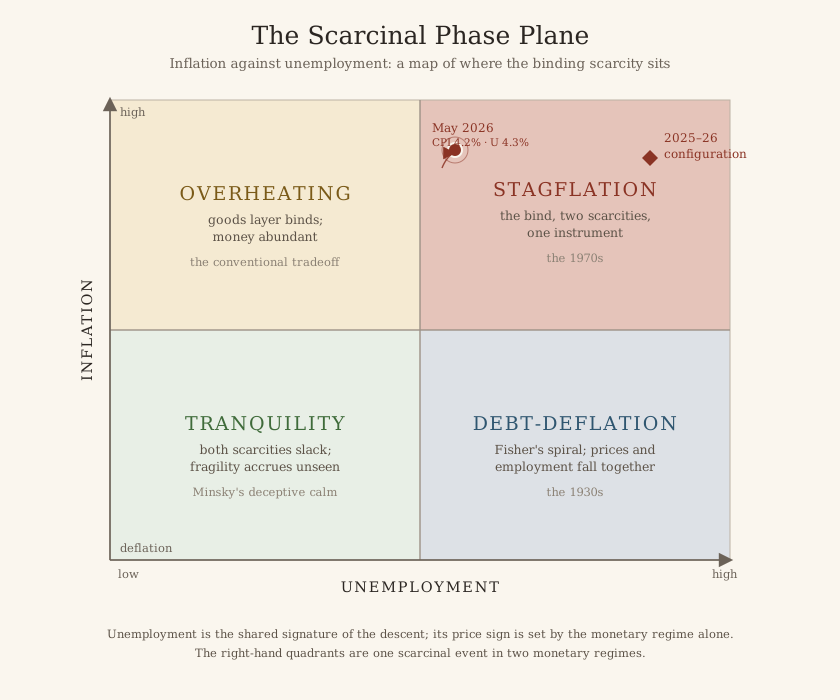
The June reading put the economy in the upper right, the stagflation corner. This asks the next question. Given where it sits, and what the administration says it intends to do, where does it go from here?
Where the term starts from
Inflation is running well above target, pushed by two things at once: a tariff surcharge on imports, sitting underneath an energy shock from the conflict with Iran. Both raise prices without raising output, which is the specific combination that produces this corner.
The likely case: a long dull grind
The most weight goes on sitting in this corner for a long time rather than breaking dramatically out of it.
The reason is the framework’s first rule. What runs out first is money, and money can be managed. A central bank can hold a bad situation together for years without either fixing it or letting it collapse. That is not a happy outcome. It is just the most probable one.
The hinge: Fed independence
One thing decides which way it breaks, and it is not a number. It is whether the Federal Reserve chair holds the line.
Hold, and keep policy tight enough to defend the dollar, and you get the grind. Slow, uncomfortable, survivable. Give way to political pressure and cut into an inflation that has not finished, and the shortage moves somewhere far less convenient.
The bad tail: a crisis with nobody left to call
The real danger is not the grind. It is a financial accident arriving at a moment when the person who would normally fix it has already spent their credibility.
A credit event. A failed auction. Something breaking in a corner nobody was watching. In the ordinary version of that story a central bank steps in, everyone believes it, and the panic stops. That only works if the belief was banked in advance.
An institution that has been publicly leaned on has already spent that reserve. Which means the tool still exists and the thing that made it work does not.
The good tail, which is real
Honesty requires the good branch, and the treatise’s own objections insist on it.
Suppose the energy shock fades. Suppose the tariff turns out to be a one-time bump rather than a lasting push. And suppose the supply side responds the way its defenders expect.
Then inflation falls without unemployment rising much, and the whole thing looks in hindsight like a bad year rather than a turning point. That path is genuinely available, and this framework should say so.
The verdict, and what to watch
Most likely: a grind through the next year and a half. The things people buy on credit soften first. The long end of the bond market carries the strain that policy will not.
- Core inflation. The tell for whether the energy and tariff push is a one-time bump or is becoming embedded.
- The term premium. The long end is where a suppressed scarcity reappears. A steepening here is the bond market sending the bill.
- Fed independence. Whether the chair cuts under pressure or holds. This is the hinge.
- Housing and autos. The canaries. Softening here is the descent beginning, visible before it reaches the cash economy.
- The dollar. The last place a relocated scarcity goes, and the first sign that debasement fears are winning.
As of 15 June 2026. A conditional reading through one framework, about direction rather than magnitude, over a horizon long enough that no one should claim precision. The framework's own objections section concedes that money is not always the binding scarcity; a supply-side reading of the same facts is coherent and may prove closer to the mark. Not a forecast, and not investment advice.